Colombia Defines Its Presidential Candidates
The left is united behind Cepeda. The right is still figuring it out.

🇪🇸 Si quieres leer esta edición en tu idioma, suscríbete al canal de WhatsApp de LatAm Explained en español.
Yesterday, Colombians went to the polls to elect a new Congress and select presidential candidates in three inter-party primaries. More than 3,000 candidates took part. Turnout was about 48 percent, and the UN said the election went smoothly, with no major security problems.
Results show that the new Congress is divided, with no party holding a majority. President Gustavo Petro’s left Pacto Histórico coalition got the most Senate votes at 22.8 percent, winning more seats than in 2022. Former President Álvaro Uribe’s right Centro Democrático came second with 15.6 percent, rising from 13 to about 16 or 17 seats. The Partido Liberal got 11.7 percent, Alianza Verde 9.8 percent, and Partido Conservador 9.6 percent.
For the first time in his career, Álvaro Uribe did not win a Senate seat he ran for. He was 25th on his party’s list, but Centro Democrático is expected to win only about 17 seats. Uribe, who’s been a main character in Colombian politics for decades, has been in the news lately after being convicted of procedural fraud and witness bribery, but the conviction was later overturned.
The presidential primary results now give us room to analyze.
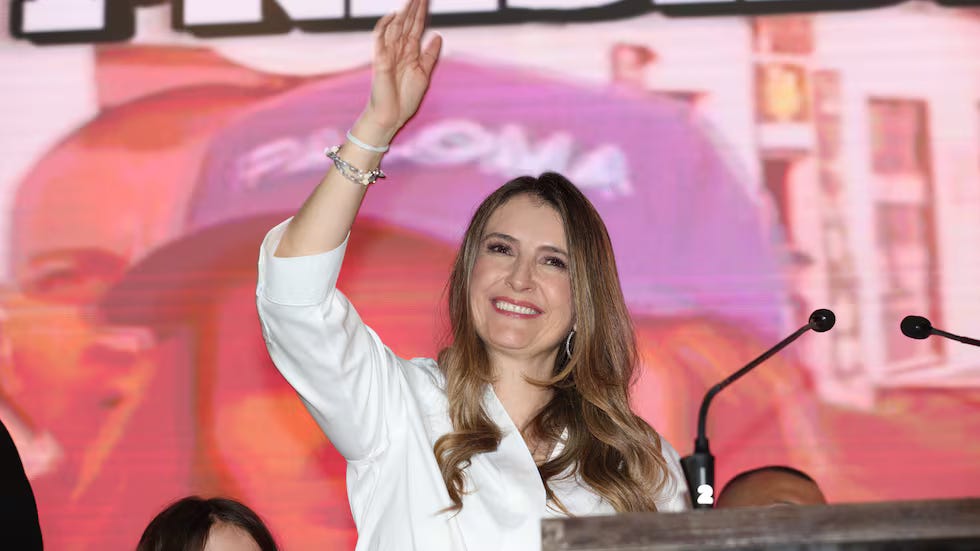
Senator Paloma Valencia won the right-wing “Gran Consulta por Colombia” primary with 55 percent of the votes. Her primary had the highest turnout of the three. Valencia is Uribe’s protégée, and he campaigned with her across the country. In her victory speech, she said: “Uribe, you left a mark I intend to follow.”
She will now face Abelardo de la Espriella, a far-right populist who supports El Salvador’s Bukele and Argentina’s Milei and did not participate in the primary. De la Espriella is polling between 18 and 23 percent, while Valencia was polling at just 7 percent. The right-wing vote is split between the uribista establishment and the far-right outsider.
The left is already united. Iván Cepeda, a senator, human rights activist, and son of a senator killed by paramilitaries in 1994, leads all polls at 31.9 percent. He is Pacto Histórico’s candidate and could not run in the primary because he had already won his party’s internal vote. Petro’s recent rise in popularity and the strong congressional results on Sunday make Cepeda, his candidate, the clear frontrunner.
The center remains divided. Former Bogotá Mayor Claudia López won the centrist primary, but turnout was low. She now faces Former Antioquia Governor Sergio Fajardo, who is running for president for the third time. Fajardo did not take part in her primary and is polling at 5-8.5 percent. He calls himself the “third way,” but in a polarized race, the center will likely struggle to gain support.
At this point in the campaign, we’ll see the main fight within the right and center as candidates try to convince their rivals to step aside and unite behind them. Because of this, the campaign will likely focus more on internal talks to avoid splitting the vote. A November poll showed that 62 percent of voters were undecided, with their main concerns being corruption, street crime, and violence from armed groups.
Most polls show that Cepeda would beat De la Espriella by a wide margin in a runoff, but he is in a “technical tie” against Fajardo. According to Polymarket, Cepeda has a 45 percent chance of winning the presidency.
The right faces a math challenge. If Valencia and De la Espriella do not unite before the first round, they risk splitting the anti-left vote and giving Cepeda a strong lead or even a first-round win. The first round of voting is on May 31, so there are two and a half months of intense campaigning ahead.
Kast Breaks With Chilean Tradition

A few days before his March 11th inauguration, President-elect José Antonio Kast suspended his collaboration with outgoing President Gabriel Boric during the presidential transition. Since the end of Pinochet’s dictatorship, Chile has usually had smooth and cooperative transfers of power since Pinochet’s dictatorship ended, so Kast’s move was unusual.
The conflict started over a Chinese-backed submarine fiber-optic cable project called the “Chile China Express,” which connects central Chile to Hong Kong. In January, Boric’s transport secretary approved the project without publicly announcing it. After that, the U.S. sanctioned three Chilean transport officials, saying they had “compromised critical telecommunications infrastructure.”
Kast and Boric met briefly on March 3rd. Kast asked Boric to retract his statement that he had already informed the new administration about the project, but Boric refused. Kast then said, “We are ending the handover process because we do not trust the information being delivered.”
Boric then said he called Kast on February 18th to discuss the cable issue before the U.S. sanctions happened. But after several tense days, both sides started talking again and are now working together on the final details of the transition.
Analyst Gonzalo Arana Araya told Latin America Reports that Kast might have wanted to “create a clear distinction between the current and incoming administrations, expanding the space to criticize Boric more forcefully.”
Personally, I think this was unnecessary. Everyone knows Kast is not Boric, and that his friends are not Boric’s friends.
Ecuador with U.S. Troops on the Ground

On March 3, U.S. Southern Command announced that Ecuadorian and American military forces had begun joint operations “against Designated Terrorist Organizations in Ecuador.” A few days later, on March 7, the Pentagon said that, at Ecuador’s request, a U.S. military team carried out a “successful” targeted operation against a suspected drug-smuggling site in Ecuador. They did not provide any details about casualties or which group was targeted.
This is the first time the U.S. military has operated openly in Ecuador since the Manta Forward Operating Location closed in 2009, when Rafael Correa was president. These operations are taking place under a Status of Forces Agreement rather than a permanent base, which is an important legal distinction in Ecuador.
Ecuador used to be known as Latin America’s “island of peace,” but violence increased after COVID. Criminal groups, especially those linked to Mexican and Colombian cartels, took advantage of Ecuador’s Pacific coast location between Colombia and Peru, the world’s largest cocaine producers. In 2023, the homicide rate jumped to 47.2 per 100,000 people, the highest in the Americas.
Crime was the main issue in both of Daniel Noboa’s presidential campaigns in 2023 and 2025. He promised to fight violence and organized crime, making security his top priority. In January 2024, he declared an “internal armed conflict” and called 22 criminal groups terrorists.
Noboa’s alignment with Trump is questionable. The broader implications of the U.S. military presence in Ecuador raise sovereignty concerns that cannot be ignored. At the same time, Ecuador’s security crisis is real and needs attention. People in Ecuador are living in fear, and violence has grown beyond what local forces can manage alone.
We can debate whether this approach is the right one, but everyone hopes it will help. Right now, Ecuador needs a solution that works.
A Corruption Case Shakes Paraguayan Politics

On March 4, José González Maldonado, the legal director of Paraguay’s social security institute, resigned under pressure because of a major corruption scandal at the Instituto de Previsión Social (IPS). IPS is the primary safety net for formal workers and has an annual budget of $2 billion.
González’s reported wealth grew by 215% in 15 months, rising from 276 million to 870 million guaraníes. He explained this increase as legal fees from a lawsuit he won for IPS, which brought him 412 million guaraníes. But investigators found that he did not mention other lawyers’ involvement, claimed the full amount as his own income, and approved three times as many external legal contractors, costing IPS 2.6 billion guaraníes each year. The National Tax Directorate started a fiscal investigation on February 26, and Senator Rafael Filizzola filed a criminal complaint.
González’s resignation is the latest in a series of IPS corruption cases that have led to congressional hearings and calls for impeachment. IPS awarded contracts worth about $23 million for laundry services and bed sheets, and the National Public Procurement Directorate approved them even though the prices were inflated. A group linked to the son of Colorado Party Senator Luis Alberto Pettengill also received a multimillion-dollar IPS contract, raising concerns about conflicts of interest.
IPS president Jorge Brítez was called to speak before Congress on February 19 and said the accusations were “political persecution.” Independent deputy Rubén Rubin called the IPS “a carnival” and is considering initiating impeachment proceedings.
President Santiago Peña has not made any comments, but the Paraguayan press has criticized him. ABC Color wrote in an editorial: “The maximum responsible is the one who appoints and sustains them: Santiago Peña.”
The World Baseball Classic Is On

After a long wait, the World Cup has finally started... just not the one you’re thinking of. The World Baseball Classic takes place from March 5 to 17. If you’re not from a baseball-loving country, you might not know how important this tournament is to us.
The WBC is the biggest international baseball tournament. It’s basically baseball’s version of the World Cup. It started in 2006, created by Major League Baseball and the World Baseball Softball Confederation. This is the sixth edition. Twenty teams compete in round-robin groups in Miami, Houston, San Juan, and Tokyo. The semifinals and final are in Miami.
This is the only tournament where Major League Baseball stars from the U.S. can represent their home countries. As we’ve seen before in this newsletter, baseball is a big part of life in the Caribbean and Latin America. This year, nine Latin American teams are competing: Dominican Republic, Venezuela, Cuba, Puerto Rico, Mexico, Panama, Colombia, Nicaragua, and Brazil.
Along with the United States and Japan, the Dominican Republic and Venezuela are top favorites. The Dominican Republic has been impressive, averaging 12 runs per game in pool play and beating the Netherlands 12-1. Venezuela started with a 6-2 win over the Netherlands and then beat Israel 11-3. Luis Arraez had a standout game, going 4-for-5 with two doubles and two home runs.
I saw a great comparison from Instagram accounts @beisbolizando and @rematedegol that helps explain the teams:
Japan is similar to Brazil: technically skilled, with many titles, and always entertaining to watch.
The United States is like Germany: a powerhouse with lots of resources, but it took them a while to win a title.
The Dominican Republic is like Argentina: passionate, talented, and probably the best team in terms of individual players.
Venezuela is like England: always competitive, never quite winning, but maybe this is their year.
Puerto Rico is like the Netherlands: they often outperform expectations, are scrappy, and have reached several finals but never won.
And Mexico is Mexico: passionate, unpredictable, but never quite reaching the final round.
This tournament is a big deal. The top two teams from the Americas, along with the USA, will qualify for the baseball tournament at the 2028 Los Angeles Olympics.
Before the WBC, international baseball only had amateur tournaments without MLB players. It was kind of like watching football in the Olympics. The WBC changed all of that.
While it’s likely that Shohei Ohtani will lead Japan to its third title and confirm his status as the baseball GOAT, it’s still worth following and cheering for our Latin American teams, who could pull off a historic upset.
That’s all for now. If you found this valuable, here’s how you can support me:
Subscribe for free to get editions like this every week: one main analytical piece, three important stories from Latin America, and one cultural recommendation to help you understand our region better.
Like this post by tapping the heart button. It helps more people discover LatAm Explained.
Leave a comment below. I read every single one, and your perspectives make my content better.
Share this with someone who’d appreciate my analysis of Latin America. Forward this email, or use the button below:
You can also follow me on Instagram, X, and TikTok for more of my content.
Gracias por leer. Hasta la semana que viene.