


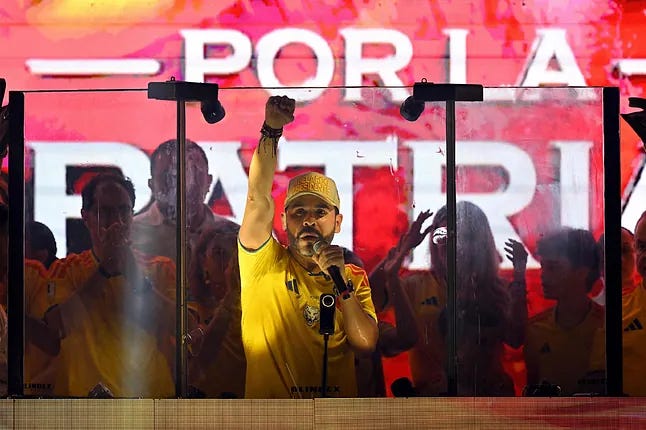
Yesterday I was recording some stories for my Instagram, briefing my followers on what to know about the elections in Colombia. As I kept reading and showing international headlines, I noticed that almost all of them called this the “most polarized election in Colombian history.”
Honestly, I keep thinking that almost every presidential election I have covered in Latin America, at least in this decade, has been called the “most polarized so far” in that country’s history. Just a few examples: Peru 2021 (Pedro Castillo vs. Keiko Fujimori), Brazil 2022 (Lula da Silva vs. Jair Bolsonaro), Argentina 2023 (Javier Milei vs. Sergio Massa), Venezuela 2024 (Nicolás Maduro vs. Edmundo González/María Corina Machado), and Chile 2025 (José Antonio Kast vs. Jeanette Jara).
At some point, we should stop treating these polarized elections as isolated events and instead see them as signs of the times. Our societies are failing to generate dialogue and consensus. Politicians, whether acting in good faith or not, exploit those fractures because it works. I’m aware that this is not just a Latin American problem, but a global one. But Latin America is becoming one of the clearest places to see it.
