

Cuba Doesn't Want Humanitarian Aid, They Want Freedom
As the island sits in darkness and Cubans protest in the streets, the government is in talks with the U.S.

This piece was ready to send a week ago. Then new developments came in, and I waited one more day. Then another. Then Trump said he wanted “the honor of taking Cuba,” and a flotilla of leftist activists sailed into Havana, and the grid collapsed again. This is the first edition in two weeks, and Cuba is the reason why.
Seven weeks ago in this newsletter, I wrote that Cuba’s regime would either collapse or start collaborating with the Trump administration, much like Delcy Rodríguez in Venezuela. Something had to give.
Well, something gave.
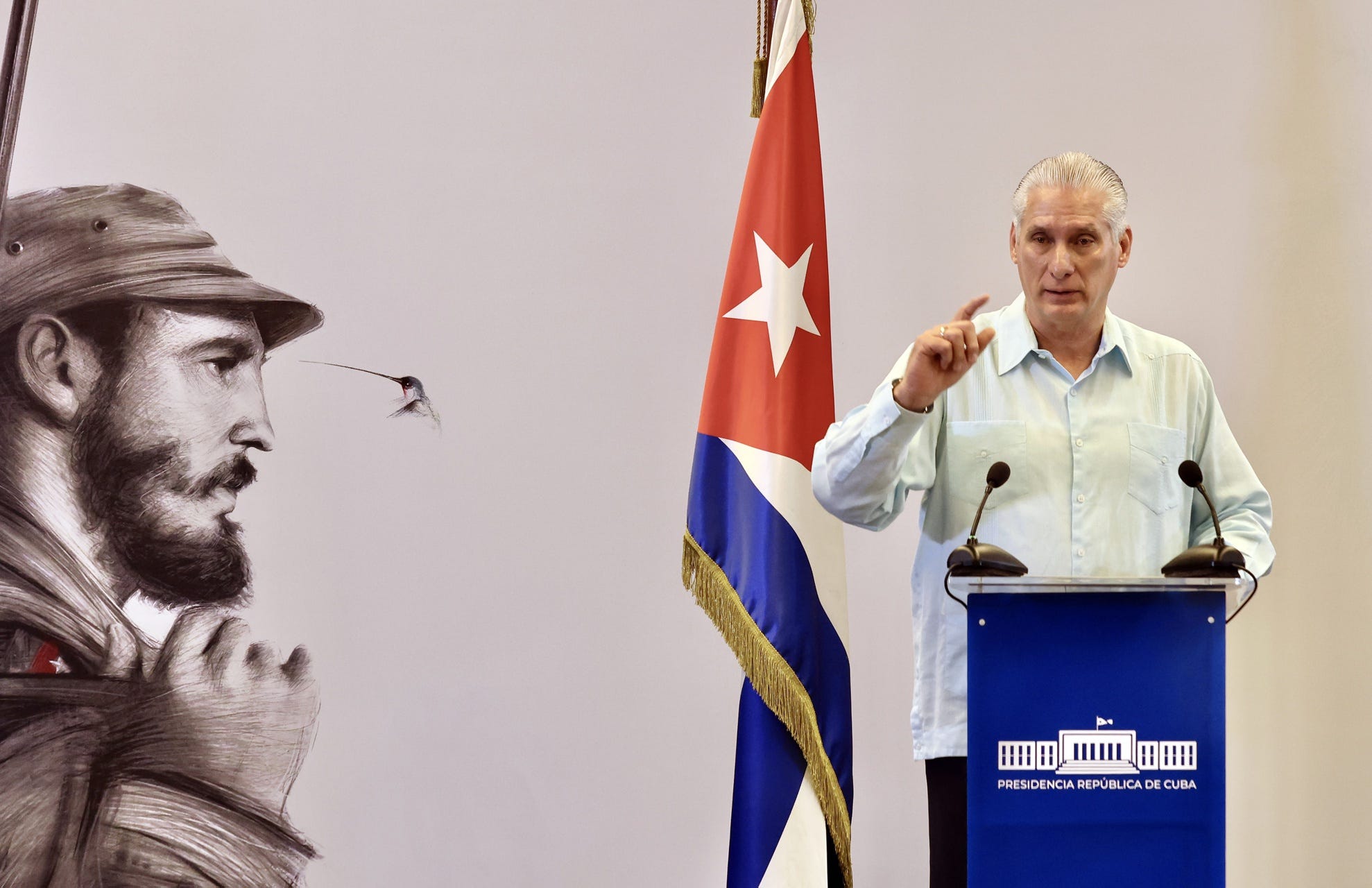
On March 13, in a 90-minute televised address, President Miguel Díaz-Canel confirmed what Washington had been hinting at for weeks: Cuban officials are holding direct talks with U.S. representatives. “These are processes that are done with great discretion,” he said. “They are long processes.” He also confirmed, matter-of-factly, that no fuel has entered Cuba in three months.
Díaz-Canel and Raúl Castro are leading the talks for Cuba. Raúl Castro’s grandson, Raúl Guillermo Rodríguez Castro, also known as “El Cangrejo,” had already been mentioned as an informal U.S. contact. Secretary of State Marco Rubio has had “secret, high-level conversations with several people in Raúl Castro’s inner circle” at least six times recently. Castro and Díaz-Canel are watching Maduro closely. They don’t intend to share his fate.
Trump has been very direct. On March 17 at the White House, he said, “All my life I’ve been hearing about the United States and Cuba — when will the United States have the honor of taking Cuba? Whether I free it, take it — I think I can do anything I want with it.” The next day, Rubio said that Cuba needs “new people in charge.” Díaz-Canel replied on X: “Any external aggressor will clash with an impregnable resistance.”
All of this is happening during a humanitarian crisis that has only gotten worse in Cuba’s already fragile situation under Castroism. The crisis deepened after Trump signed Executive Order 14380 on January 29, blocking any country from sending oil to Cuba. This order targeted Venezuela, which had already stopped shipments, Mexico, which quietly ended its deliveries, and Russia, which sent almost nothing. The result has been blackouts lasting 18 to 20 hours, gasoline limited to 20 liters per car, almost all surgeries except emergencies canceled, and 11,000 children waiting for operations that cannot happen.
On March 16, the entire National Electric System failed, leaving all 11 million Cubans without power for 29 hours. It happened again on March 21. By Sunday, only 72,000 of 2 million houses in Havana had power restored. Three nationwide blackouts in March alone. Jorge Piñón from the University of Texas warned that Cuba would reach “zero hour” by mid-March. That time has come.
By early March, Cubans had reached their limit. Around March 6, cacerolazo protests began spreading through neighborhoods. On March 9, students gathered on the steps of the University of Havana. When they tried to meet again on March 10, the government organized a “popular celebration” with loudspeakers and children’s games at the same spot.
It didn’t work. On March 14, residents of Morón, Ciego de Ávila, attacked the municipal Communist Party headquarters, setting furniture on fire and breaking windows while shouting “¡Libertad!” Five were arrested. March 15 marked the tenth consecutive day of protests — the longest stretch since July 2021. As of this writing, protests have occurred every single day for nearly three weeks.
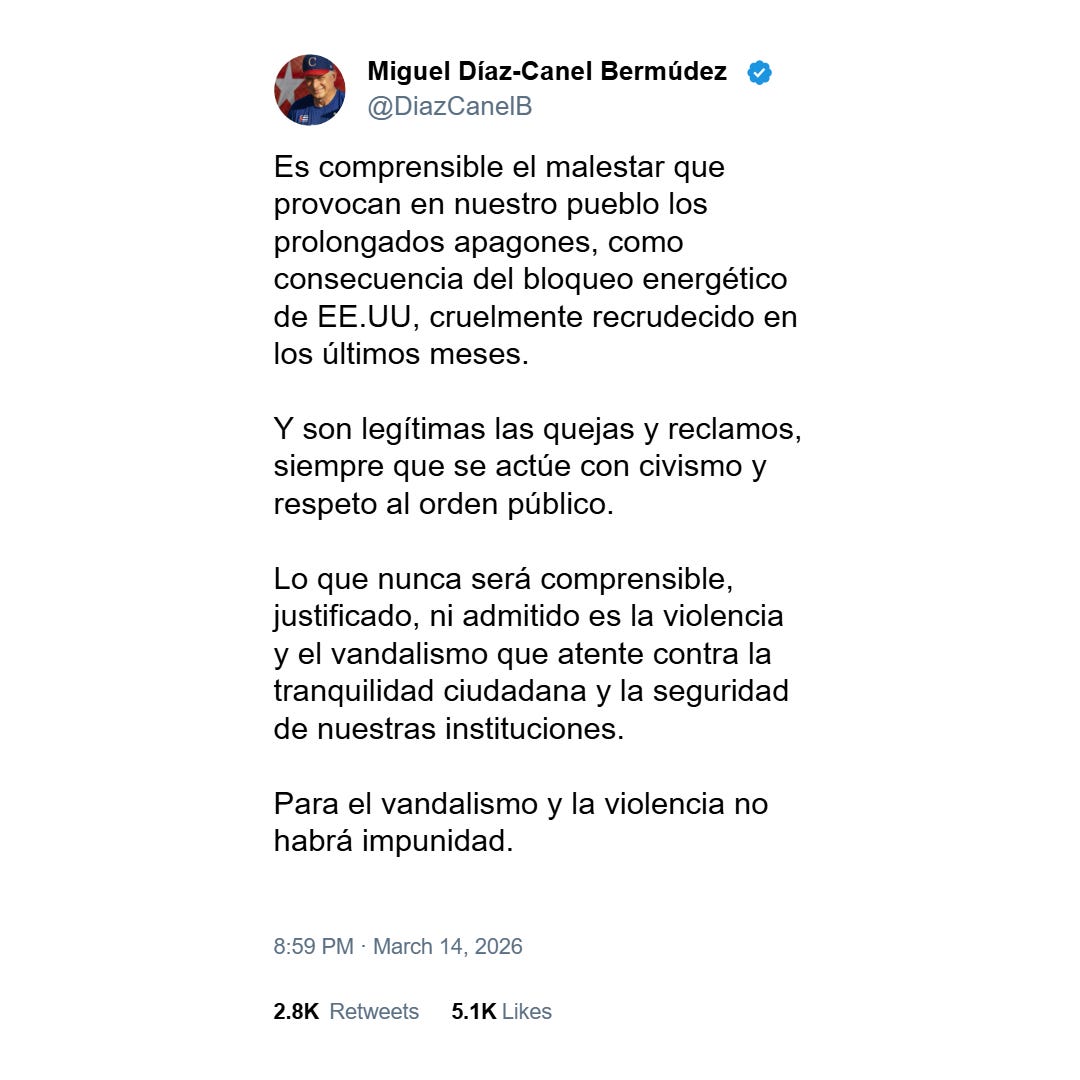
In response to the events in Morón, Díaz-Canel’s statement was revealing: “The complaints and claims are legitimate, as long as they are made with civility and respect for public order.” For a regime that has spent decades denying any legitimate grievances, that statement is a concession.
This was the situation when the Nuestra América Convoy arrived. On March 20 and 21, 650 delegates from 33 countries — including Jeremy Corbyn, Pablo Iglesias, Rashida Tlaib, and Twitch streamer Hasan Piker — sailed into Havana from Yucatán. They brought 20 tons of food, medicine, solar panels, and flashlights. The convoy was organized by Progressive International and CodePink, modeled after the Gaza flotilla. Several of its main organizers have documented ties to the Cuban government — one co-coordinator has met with Díaz-Canel multiple times and received a personal public defense from him on social media.
The Cuban exile community argues that aid going through the regime never reaches ordinary people. Mexican food aid has already been seen in Cuban stores, sold for U.S. dollars.
This is the main point. The Cuban people do not need Jeremy Corbyn arriving with flashlights. They need the government that has plunged the island into darkness to stop. Costa Rica understood this and closed its embassy in Havana last week, telling Cuba to withdraw its diplomats because of the government’s repression of its own citizens.
On March 12, Cuba released 51 prisoners through Vatican mediation. The government didn’t disclose names or clarify whether political prisoners were included, since it officially denies their existence. This follows the same Vatican approach as in January 2025, when 553 prisoners were released under Biden.
The regime is slowly, carefully, and deliberately giving ground. But these days, the island is completely dark. That changes everything.
Yes, Bukele Is Violating Human Rights
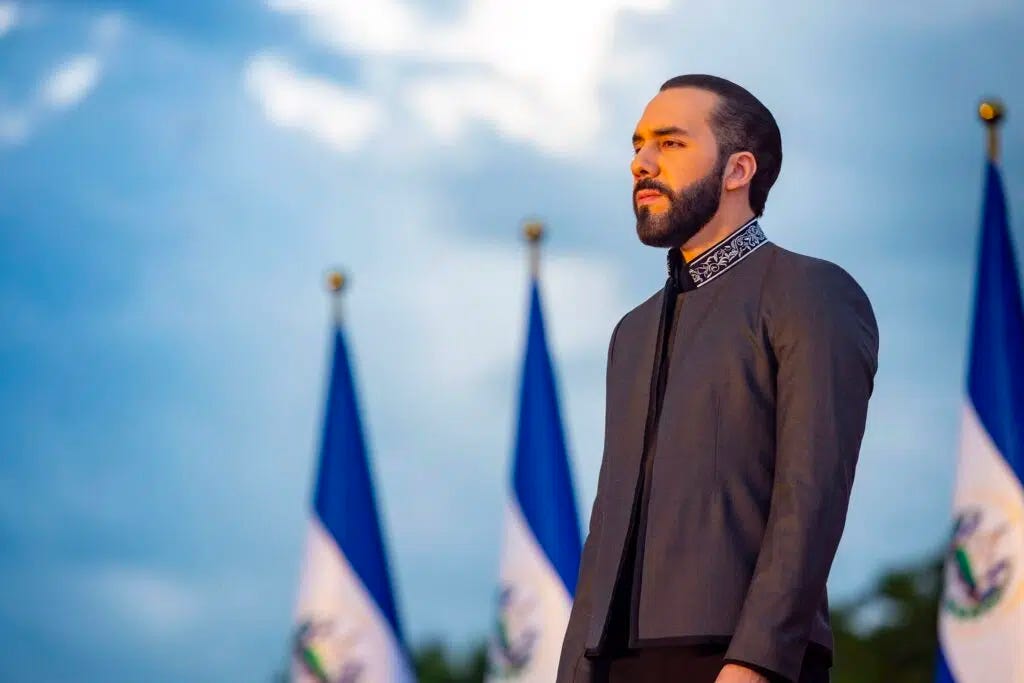
Nayib Bukele rose to power by tackling a real problem. El Salvador used to be one of the most violent countries in the world, and people were desperate for change. He delivered, or at least the homicide rate dropped sharply, and people felt safer than they had in decades. That gave him huge political capital. He still has it: his approval rating is 91.9%, the highest among world leaders.
Now he is using that power to strengthen his control.
On March 10, five respected jurists said there are “reasonable grounds to believe that crimes against humanity are being committed” in El Salvador, under Article 7 of the Rome Statute. This news didn’t surprise anyone who has been watching the region. More than 91,000 people have been detained under a state of exception that has lasted four years. At least 403 people have died in state custody. Over 3,000 children have been detained. There are also reports of torture and sexual violence at CECOT, the mega-prison that holds 40,000 people and lets inmates out of their cells for only 30 minutes a day. The report was presented to the Inter-American Commission on Human Rights and the UN Human Rights Council in Geneva. The jurists gave a legal name to what human rights groups have long said.
A few days before, the Salvadoran rights group Cristosal reported 86 political prisoners—the first since the 1992 peace accords. “For the first time since the armed conflict, there are political prisoners in El Salvador,” said Cristosal’s research director, René Valiente.
Bukele dismissed it as a Soros-funded conspiracy. El Salvador has ratified the Rome Statute, so the ICC has jurisdiction, but no investigation has yet begun, and recent history shows it is irrelevant.
Nicaragua Runs a Spy Network
As a Venezuelan in exile, this honestly scares me.
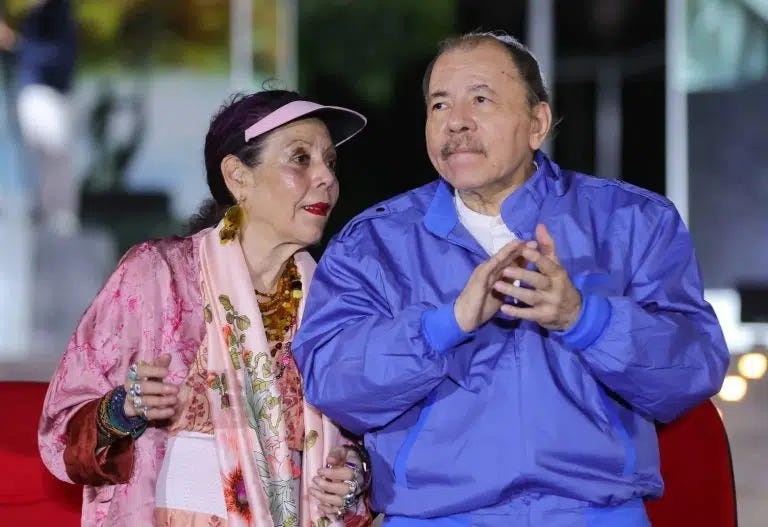
On March 10, the UN Group of Human Rights Experts on Nicaragua published its most detailed report yet. For the first time, it describes a transnational espionage network led by co-president Rosario Murillo that operates in at least five countries. This network includes military intelligence, the national police, telecom regulators who run troll farms, diplomatic missions, and FSLN informant networks. It even recruits people from outside Nicaragua. The report says most ambassadors serve as FSLN political secretaries and report directly to Murillo.
These operations include hacking, physical surveillance of exiles, death threats, misusing INTERPOL red notices, and at least a dozen killings or attempted killings of critics living abroad. One victim was Roberto Samcam, a retired army major who was killed at his home in San José, Costa Rica, in June 2025.
I know this kind of system. Venezuela built the same thing. The two governments have shared intelligence for years. The UN also found that $5 million in public money was used to fund paramilitary violence during the 2018 crackdown. With all the problems Nicaraguans face, this is what their regime spends its money on.
MAS Had All for 20 Years. Now It’s Gone.
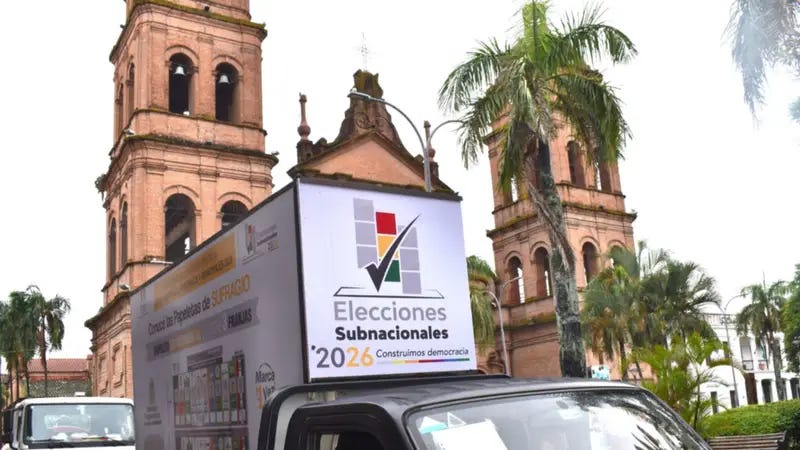
Bolivia held subnational elections yesterday across nine departments and 335 municipalities. The Movimiento al Socialismo, which led Bolivia for almost twenty years, built its image around Evo Morales as a legendary indigenous leader, changed the constitution, and controlled every branch of government. It did not put forward a single candidate in any departmental capital city.
The collapse happened quickly, even by Latin American standards. The conflict between Morales and Arce split the party from within. In August 2025, MAS ran in the presidential election and received only 3.17% of the vote. By December, former president Luis Arce was arrested on corruption charges. Morales has not appeared in public since January 8 and now has an active arrest warrant for statutory rape and human trafficking. Nearly 200 political groups were on the ballot. Results are still being counted.
Two decades of dominance rarely end this way. There was no dramatic final moment. The party simply faded from electoral prominence before most people realized it was gone. MAS collapsed into itself.
We Are Champions. Finally.
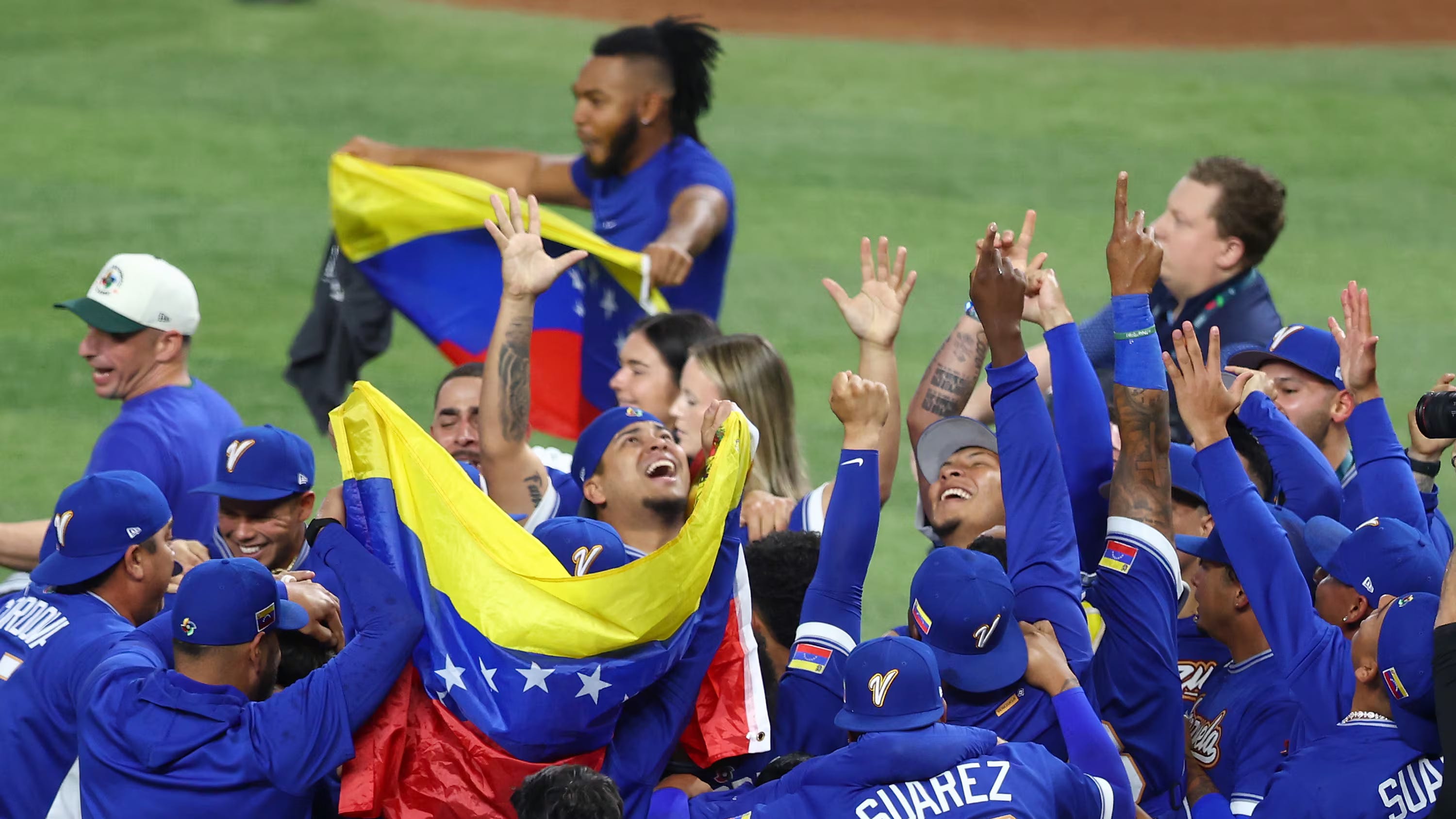
My schedule has been completely upside down this past week. Most World Baseball Classic games started at 1 or 2 AM my time and finished at 4 or 5. I watched every one of them. It was completely worth it.
Venezuela won it.
On March 17 at LoanDepot Park in Miami, Venezuela defeated the United States 3-2 in the final. Eduardo Rodríguez pitched 4⅓ scoreless innings. Venezuela was up 2-0 going into the eighth, but Bryce Harper hit a 434-foot two-run homer to tie the game. In the ninth, Eugenio Suárez hit an RBI double to put Venezuela ahead. Daniel Palencia finished the game. Aaron Judge went 0-for-4, and Maikel García was named tournament MVP.
Venezuela has had world-class teams for years, but they always came up short. This time, they knocked out defending champion Japan in the quarterfinals, beat Italy in the semis, and then beat the Americans on their home ground.
But what made this special wasn’t just the baseball. For so long, Venezuelans haven’t had anything to celebrate without politics getting in the way. There haven’t been any clear victories or moments of pure pride without something overshadowing them. This felt like something many of us hadn’t felt in years. The sold-out crowd in Miami, the city with the most Venezuelan-born residents in the United States, was completely theirs.
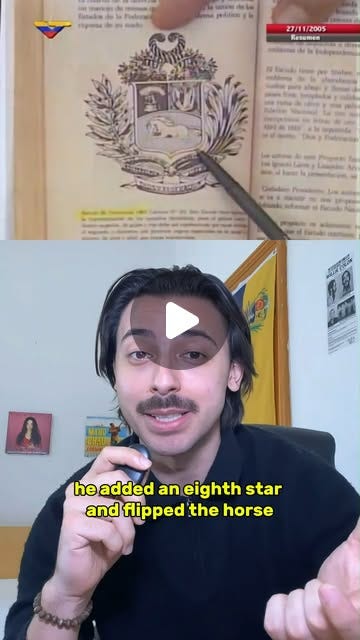
Venezuela declared the next day a national holiday, and for many people, it was finally a chance to celebrate openly. This came less than three months after the U.S. captured Maduro.
Also, Latin America now holds both the football and baseball world titles. We’re doing pretty well.
That’s all for now. If you found this valuable, here’s how you can support me:
Subscribe for free to get editions like this every week: one main analytical piece, three important stories from Latin America, and one cultural recommendation to help you understand our region better.
Like this post by tapping the heart button. It helps more people discover LatAm Explained.
Leave a comment below. I read every single one, and your perspectives make my content better.
Share this with someone who’d appreciate my analysis of Latin America. Forward this email, or use the button below:
You can also follow me on Instagram, X, and TikTok for more of my content.
Gracias por leer. Hasta la semana que viene.