Honduras Election Remains Too Close to Call
Still no winner, but at least no chaos.
Si quieres leer esta edición en tu idioma, suscríbete al canal de WhatsApp de LatAm Explained en español.

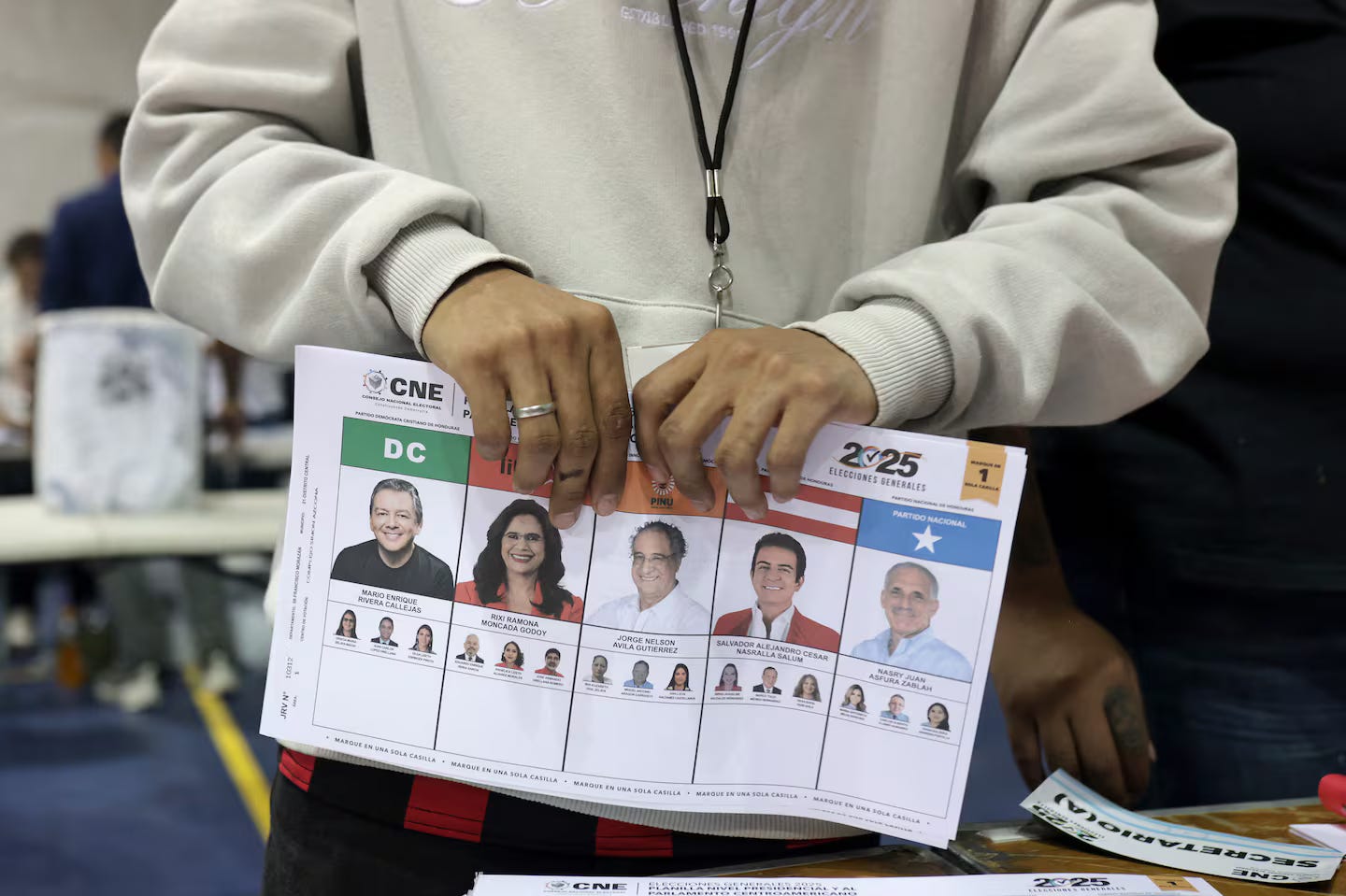
This edition is late because, as of the afternoon of December 1, Honduras still has no official winner in the presidential election. The November 30 vote is still too close to call.
The preliminary results show how tight the race is. With 58 percent of polling stations counted, Nasry “Tito” Asfura has 39.91 percent and Salvador Nasralla has 39.89 percent, a difference of only 515 votes nationwide. Rixi Moncada is in third place with 19.16 percent. Since the margin is so small, no credible sources are predicting a winner yet.
The National Electoral Council has called for patience and asked everyone to wait for the full count before claiming victory. Both Asfura and Nasralla said on Sunday night that it was too soon to declare a winner, which is unusual in a region where early victory speeches are common.
But this election is about more than just numbers. The United States played a big role in the campaign. Trump openly supported Asfura, threatened to stop U.S. aid if the left won, and even pardoned Juan Orlando Hernández, the former president and ally of the conservative candidate who was extradited to North America in 2022. This kind of open interference does not happen often.
Rixi Moncada called this election a historic fight between a “coup-plotting oligarchy” and a democratic socialist project that will continue the current government’s policies. Her campaign focused on the Zelaya 2009 crisis and the idea that the country still needs real democratic change.
Between these two sides is Nasralla, the centrist who has run and lost several times, making him a familiar figure in national politics. He is always competitive but never the clear favorite.
Observers were less worried about who would win on Sunday and more focused on whether the voting process would work. The campaign was full of fraud accusations, including supposed audio leaks of vote-rigging plans. Asfura’s party said these leaks were made with AI. The electoral authority asked all sides to stop “fanning the flames.”
The most important thing right now is that Sunday’s vote took place peacefully. There was no major violence, no breakdown of institutions, and no street clashes. None of the worst-case scenarios people feared after a tense campaign. Tegucigalpa’s streets stayed quiet while ballots were counted slowly.
Asfura might win, or Nasralla could still take the lead. Rural precincts may change the outcome. No matter what happens, I truly hope the days after the vote remain as calm and responsible as election day itself. After years of unrest, Honduras has given itself and the region something rare: a democratic process that, so far, has worked just as it should.
The EU-Mercosur Deal: A Story That Never Ends

Every time I hear the EU-Mercosur free trade deal is close to being signed, it feels like déjà vu. This time, France is calling to sabotage the agreement. Once again, the deal seems trapped in the same cycle it’s been in for more than twenty years.
France’s National Assembly voted 244 to 1 against the deal. Politicians from every party in France are urging its government to oppose it. They worry that South American beef and soy could harm European farmers, that the deal could lead to more deforestation in Brazil, and that Mercosur countries should follow the same environmental rules as the EU.
These concerns are real, but they also serve a purpose. French farmers hold significant political power. Macron is under pressure from many sides, and with European elections approaching, he has little reason to oppose them.
On the South American side, Lula says the deal will be signed on December 20 and calls it “the biggest trade agreement in the world”. For Mercosur, the deal would bring lower trade taxes, more opportunities, and new partners beyond the U.S. and China.
The longer Europe delays, the more credibility it loses in South America. If France blocks what has been negotiated for 25 years, Mercosur countries will simply look elsewhere — and China will be the first to knock on the door.
Everyone Wants a Piece of the Canal

The Panama Canal is back in the news, and we need to pay close attention. After two years of drought that slowed ship traffic and reduced income, the Canal Authority is launching new construction projects and inviting companies from around the world, including China, to bid.
Panama says these projects focus on general infrastructure, like expanding water storage, updating the gates, and making sure ships can keep moving through the canal for years. But there is more at stake than just upgrades. The canal is crucial for global trade, a source of national pride, and a place where the United States and China compete for influence.
The main question now is how Panama will manage this situation. The country needs investment, but it also wants to avoid getting into a complicated position.
The canal is more than a waterway; it gives Panama, a small country, global influence. Whoever takes part in these projects will help shape the canal’s future and Panama’s role in the world for years to come.
Peru Jails Yet Another Former President

Does it surprise you to hear that another former Peruvian president is sentenced to jail? At this point, it seems almost normal. Still, this situation stands out. Pedro Castillo hasn’t been in the headlines lately, and many have forgotten how much his time as president sped up Peru’s political collapse.
This week, Castillo was sentenced for rebellion and abuse of power after he tried and failed to shut down Congress in 2022. That event didn’t just end his time in office. It also set off a series of problems that led to Peru’s current crisis: months of violent protests, an very unpopular interim government, and a public worn out by constant turmoil.
Castillo wasn’t the only person at fault, but he had the biggest impact. He led without much planning, didn’t trust others, and often fought with Congress. His removal didn’t solve the problems, and his conviction won’t either. It just reminds Peruvians of a familiar truth: presidents come and go, but the crisis continues.
We’re in December, So Let’s Talk About Zulian Gaita
Every Latin American country has its own Christmas music, like parrandas or cumbias navideñas. I could talk about any of them, but for me, nothing is as special or meaningful as the Zulian gaita from Venezuela.
Gaita comes from a region famous for its pride, rich resources, and a history of standing up to the central government in Caracas. Many classic gaitas are political, played with tambora drums, and have lyrics that speak out against being ignored, corruption, and unfairness.
What makes gaita special is that every December, it becomes the soundtrack of the entire country. You hear it on the radio, in supermarkets, and at family gatherings. Even in Caracas, where some zulianos might roll their eyes at kids from wealthy private schools singing gaita in glee clubs, people still sing it with joy. This music is beautiful, emotional, and deeply Venezuelan.
If you want to understand the soul of gaita, start with La Grey Zuliana. It’s probably the most iconic song. I won’t say it’s the most, since I’m Caraquenian and don’t want to offend anyone. The lyrics, dedicated to the Virgin of Chiquinquirá, patron of the region, ask her to make the corrupt pay for not ignoring them: (Mother, if the government won’t help the people of Zulia / you’ll have to intervene / and send them straight to hell.)
But the one that always moves me, the one that always makes me tear up, is Sin Rencor. It captures nostalgia, longing, and unrequited love in just three minutes: (And it will always be this way / that every time you hear a gaita / you’ll end up in tears / because it will make you think of me / with beautiful verses that will remind you / of all those lovely things we never got to have.)
There’s plenty of Christmas music across Latin America, but gaita is more than just seasonal music. It’s identity.
That’s all for this week. If you liked what you read, please subscribe.
You’ll get something like this every Monday: one main analytical piece, three important stories from Latin America, and one media suggestion to help you learn more about our region.
You can also follow me on Instagram, X, and TikTok for more.
Gracias por leer. Hasta la semana que viene.