They Will Try to Tell You This About Venezuela’s Earthquakes
It’s very important that you don’t believe them.

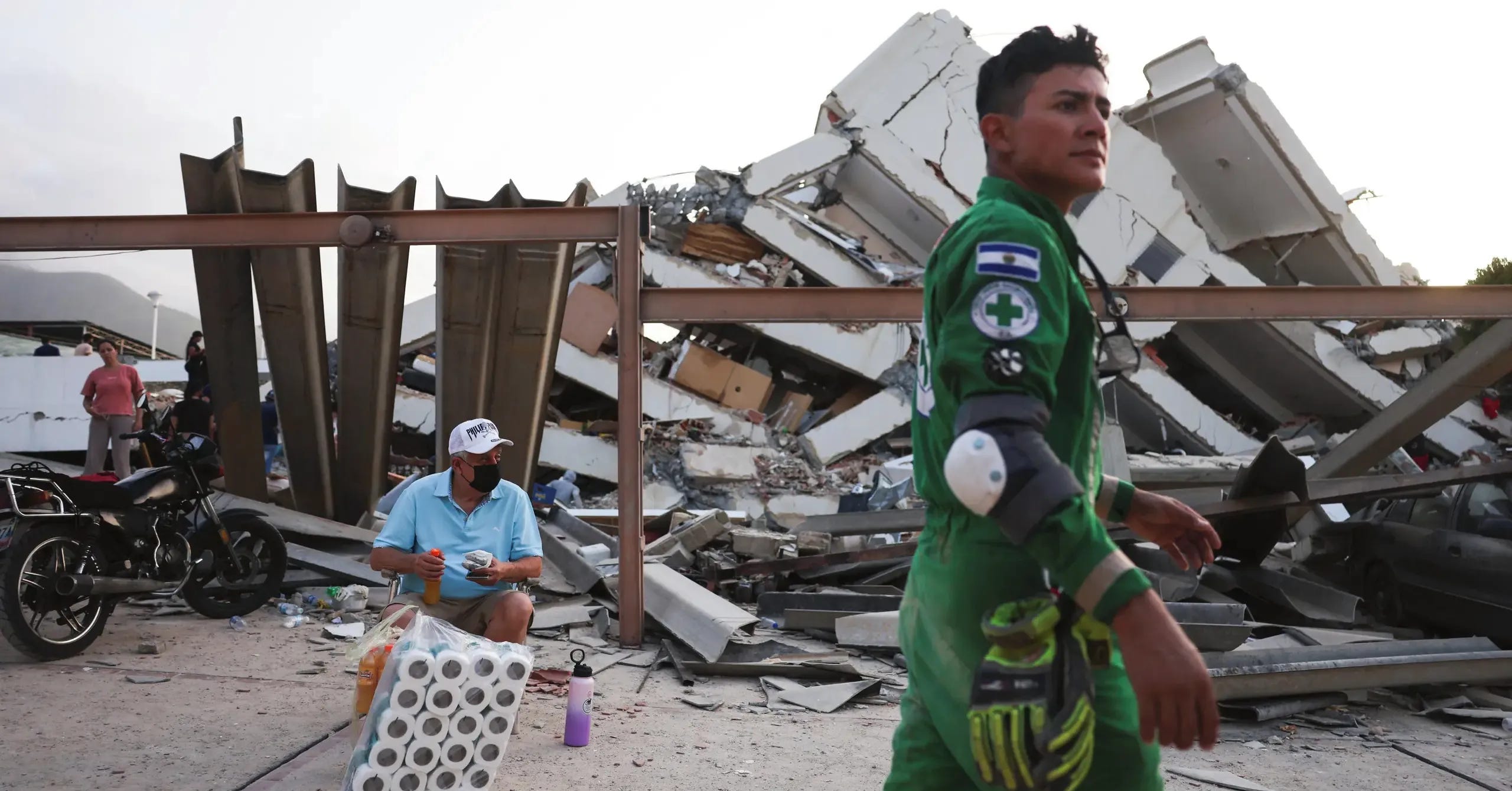
The double earthquake, or seismic doublet—a term I just learned—that hit Venezuela last week was a rarity in itself. Less than 1 in 10 large earthquakes worldwide occur as part of a doublet. In this case, the second occurred less than a minute after the first, which is why many people initially thought it was one very long quake—the baseball match footage below shows how long it really was. The Earth experiences about 15 earthquakes each year that are stronger than 7 points; 2 of those this year occurred in northern Venezuela within 60 seconds of each other.
Of course, the earthquakes weren’t Chavismo’s fault. Unless you believe in HAARP, we can all agree that governments don’t control nature. But the scale of the devastation and the poor response are Chavismo’s responsibility, which many even see as deliberate. Let’s go back a few years.
When I was a kid, my mom owned and managed a restaurant. A family business that the government took away from her, by the way, but that’s not the point right now. Among our regulars was the Venezuelan Foundation for Seismological Research, to whom my mom’s kitchen cooked and delivered lunch every day.
There was a time when they had to prepare an unusually large order because the foundation was hosting events with national and international experts for the 40th anniversary of the 1967 earthquake, which had caused severe devastation in Caracas and La Guaira, and from which we grew up hearing grim stories. I can recite them from memory: my mom was 8 years old, and she lived in a 9-story building. They had to run downstairs while my grandfather carried my great-grandmother in his arms. My dad, also 8, was in a car driven by my grandfather, and they stopped down the road when they saw buildings moving and people running into the streets in horror.
The point of all of this is that the 1967 earthquake left Venezuelan society deeply traumatized, and significant efforts were made to prevent another one in the future. Don’t ask me for the specifics, because I’m not an expert in geology, nor do I pretend to be, but it’s kinda common knowledge that events like these earthquakes in Caracas repeat themselves about every 50 years.
Around that time, we also had several earthquake simulations at school, so we would know the evacuation plan. The imminence of the big earthquake was real, and people were very much aware of it.
Like many things under Chavismo, the culture of prevention gradually disappeared. When Chávez was in power, the state still had some technical capacity inherited from the democratic period, and there was still funding for these efforts. But as meritocracy faded from the public sector, loyalists took over roles that used to belong to specialists. Under Maduro, things fell apart completely. Prevention was no longer a policy. It became just another abandoned function of a state that only reacts when it’s about itself.
And that’s where I wanted to get, because I’ve seen some politicians, influencers, activists, and alleged journalists starting to install these narratives:
That the tragic aftermath of the doublet is a result of the United States government’s sanctions on Venezuela
That the lack of response from the Venezuelan regime is Washington’s responsibility, given that Caracas follows its instructions.
If you know my work, you know how much I strive to present the facts in a nuanced, maybe not always neutral, but fair way. But this is too much, and it’s infuriating me, so let me call it what it is: opportunist misinformation propaganda.

And I know some news outlets and creators will always base their coverage of Venezuela based on how they can flatter or criticize the Trump administration, that’s just part of the landscape, and I see these outlets whose coverage of Venezuela is the Trump-critical lens really on top of the developments in Venezuela, making this one a global story that’s been on the headlines for a few days now.
Do I think the United States response to Venezuela has been slow and insufficient? Yes. Is it true that from a hypothetical perspective, sanctions could have played a role in preventing the State from buying machinery in the case they intended to? I guess that could be true, yes.
The problem with these narratives is that they effectively strip the Chavista regime of responsibility in this tragedy, and that cannot happen. The responsibility for this disaster lies 100% with the Chavista regime and the policies under the leadership of Hugo Chávez, Nicolás Maduro, and now Delcy Rodríguez.
Hours before the doublet, Financial Times was reporting that the Rodríguez regime was preparing to recognize $240bn in debt, the world’s largest restructuring. Is that also a result of the sanctions?

Enough with prevention. Things like these can happen, okay. What matters now is whether the governments responded swiftly and accordingly.
Unfortunately, that was not the case. The doublet occurred around 6 pm local time in Caracas. In the following hours, aside from notable exceptions like Chacao municipality mayor Gustavo Duque, no notable government officials were on the ground, and the State’s response was nonexistent. It was in these crucial hours that the massive, moving civic response began to build despite Chavismo’s null response.
Some reports say that in some of the hardest-hit areas in La Guaira, especially in Caraballeda, no help had arrived even 48 hours after the disaster. At the same time, reports were building that government officials were blocking the collection of goods and supplies and stopping civilian volunteers from entering to help find people, military personnel were seen stealing from disaster zones, and international aid and rescue teams were being prevented from coming to Venezuela.
The video below, whose full context has not been independently verified, shows Diosdado Cabello, Chavismo’s longtime strongman and interior minister, asking U.S. officials to turn off their truck and push it because he did not want the engine noise to interfere with rescue efforts nearby.
Maybe this was an honest misunderstanding, easily solvable with a translator, by the way. But what Venezuelans are watching in this video and in the streets is a regime that failed to prepare, failed to respond, and now appears to be obstructing civilians and international teams who are trying to help.
At the same time, international media are reporting that Nobel Peace Prize winner and opposition leader María Corina Machado is either trying to return to Venezuela or has already done so. Washington had reportedly asked her not to return to avoid a clash with the ruling coalition.
Previous discussions about Venezuela’s possible transition, the Rubio three-phase plan, and the U.S. midterms are now secondary, if not obsolete. The Venezuela case has now effectively been reset. Machado’s team likely understands that she could be excluded even further from the current arrangement, and that’s why they are pushing for a quick return. But given the scale of the crisis, Venezuela also needs strong, unified leadership on the ground.
So far, neither Chavismo nor the U.S. has provided that. And if Machado is blocked from returning, many Venezuelans will see it as an obstacle to the country’s recovery in its most urgent hours.
We will be talking for months, if not years, about the doublet and these historic, tragic days we’re living in, and the situation can change second by second, but this was something I wanted to tackle right away with you, whom I immensely thank not only that you read and support me, but also that you have reached out to ask about my family and friends. My family is safe in Caracas, but very sadly, we’ve lost some dear friends, so please understand if these are hard days to be in touch.
If you want to help Venezuelans from any other country, my main suggestion is to donate to Cáritas de Venezuela, an organization of my complete confidence that has an established network and operation throughout the country and will know where to allocate funds effectively. My colleagues from Caracas Chronicles also have a comprehensive list of ways you can help from abroad.
Thank you very much, and if you’re reading me from Venezuela, stay safe. We will recover from this.
That’s all for now. If you found this valuable, here’s how you can support me:
Subscribe for free to receive our weekly recap with three important stories from Latin America you might have missed. If you become a paid subscriber, you’ll also get our in-depth analysis and cultural recommendations, including songs, shows, books, and films to help you understand the complexity, nuances, worldview, and identity of our region. I send these out regularly, but the schedule may change based on each week’s news cycle.
Like this post by tapping the heart button. It helps more people discover LatAm Explained.
Leave a comment below. I read every single one, and your perspectives make my content better.
Share this with someone who’d appreciate my analysis of Latin America. Forward this email, or use the button below:
Gracias por leer. Hasta la semana que viene.
👋 Meet Felipe Torres Gianvittorio
Felipe Torres Gianvittorio is a Venezuelan-Spanish journalist and editor of LatAm Explained. He helps international readers understand Latin America’s politics, conflicts, and culture, drawing on his experiences in Venezuela, Ecuador, and Argentina.
He is part of the LATAM Network of Young Journalists and currently studies the Erasmus Mundus Master’s in Journalism, Media and Globalization at Aarhus University and Charles University in Prague. His research focuses on the role of media under authoritarian regimes.