

What You Missed: Paraguay Testing China, Hondurasgate, and Mexico City Protests
Foreign powers plots and desaparecidos: Latin America in a nutshell.
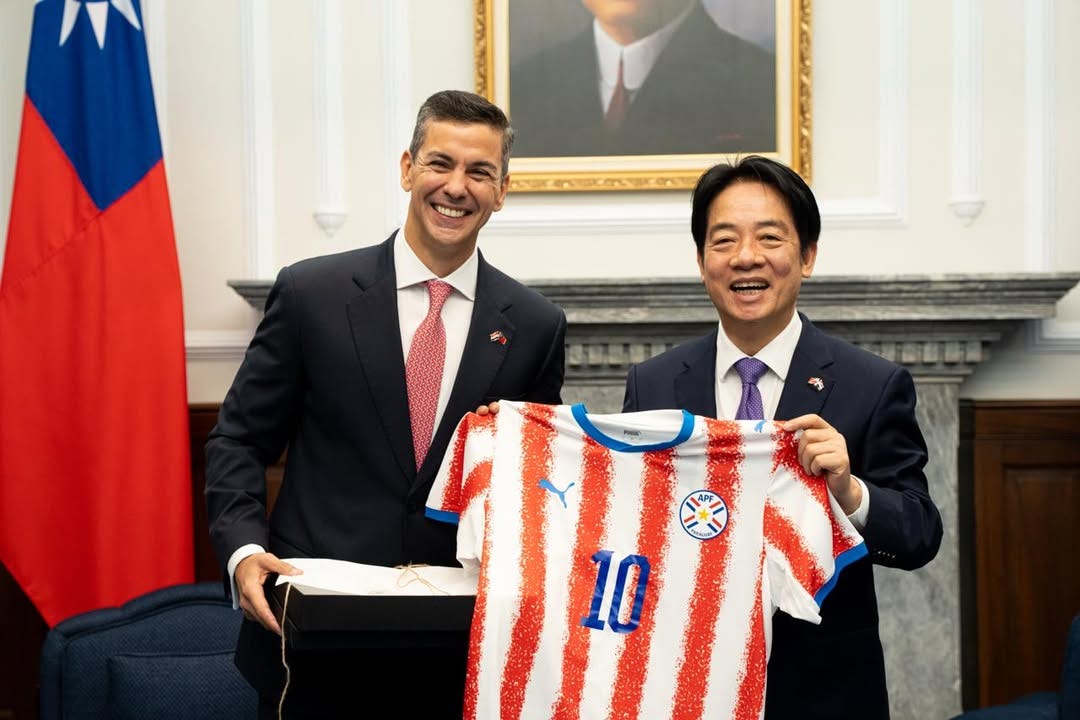
Paraguay Keeps Testing China
Last week, Paraguay’s President, Santiago Peña, visited Taiwan with more than 50 private-sector companies, making it the largest Paraguayan business group to visit the island. This was Peña’s third trip there since his 2023 election.
Paraguay and Taiwan signed seven agreements spanning AI, cybersecurity, technology, finance, justice, trade, and space via the Artemis Accords. The AI deal is promising, as Asunción aims to combine Taiwan’s semiconductor know-how with hydroelectric power from Itaipú and Yacyretá.
Beijing accused Paraguayan leaders of being “pawns” of Taiwanese separatism and urged Asunción to “stand on the right side of history.” There is also domestic pressure, as Paraguayan beef and soy producers want access to China’s market. Paraguay is the only South American country that still recognizes Taiwan, and one of only 12 in the world.
This relationship has existed since 1957, but under Peña, it has become more than a diplomatic gesture and is now a key part of Paraguay’s foreign policy.
Hondurasgate, the Conspiracy That Sounds Too Perfect
First, just to be clear: we are not the outlet they’re supposedly funding.
Now seriously. “Hondurasgate” refers to 37 leaked audio files published by Hondurasgate.ch and Diario Red América Latina, which is run by former Spanish Deputy Prime Minister Pablo Iglesias. The recordings allegedly show former Honduran president Juan Orlando Hernández, who was recently pardoned by Trump after a U.S. drug trafficking conviction, working with people close to Honduras’ current government and international right-wing groups.
The alleged plan: create a fake Latin American news site in the U.S. to gather intelligence against left-wing governments in Mexico, Colombia, and Honduras. The recordings mention Nasry Asfura, Javier Milei, Roger Stone, Israeli-linked groups, and people close to Netanyahu. The funding is said to include $350,000 from Milei and $150,000 from Honduran public funds.
This situation is serious enough to warrant investigation. However, I am skeptical of anything promoted by Pablo Iglesias without independent verification. His views on Latin America have always been driven by political agendas. Anyone unsure of this, revisit his relationship with Chavismo.
Even so, the story seems almost too perfect: Milei, Trump, Netanyahu, Honduras, fake media, drug trafficking, anti-left operations. It feels straight out of Pax Historia, an AI-powered Risk-like game I’m lately obsessed with.
Mexico’s Mothers Are Still Searching
On Mother’s Day, hundreds marched in Mexico City’s Fourteenth Marcha de la Dignidad Nacional, organized by Movimiento por Nuestros Desaparecidos en México, which unites over 90 collectives from 26 states.
The march began at the Monumento a la Madre and continued down Paseo de la Reforma toward the Ángel de la Independencia, carrying posters and shirts with the faces of their missing children. As Mexico prepares to host the World Cup, the families are asking how the country can celebrate while more than 133,000 people are still missing.
The number is horrifying. Since 2007, authorities have found nearly 5,700 hidden graves nationwide. Collectives demand a real national search plan and concrete action after years of unfulfilled promises.
Mexican governments change, parties change, presidents change, and disappearances continue. This is a structural failure of the Mexican state, and families are right to protest for it.
That’s all for now. If you found this valuable, here’s how you can support me:
Subscribe for free to get our Wednesday edition every week: three important stories from Latin America you need to know. Upgrade to paid to also receive our Monday analytical deep-dive and our Friday cultural pick — a song, a show, a book, or a film to help you understand the region better.
Like this post by tapping the heart button. It helps more people discover LatAm Explained.
Leave a comment below. I read every single one, and your perspectives make my content better.
Share this with someone who’d appreciate my analysis of Latin America. Forward this email, or use the button below:
Gracias por leer. Hasta la semana que viene.
👋 Meet Felipe Torres Gianvittorio

Felipe Torres Gianvittorio is a Venezuelan-Spanish journalist and editor of LatAm Explained. He helps international readers understand Latin America’s politics, conflicts, and culture, drawing on his experiences in Venezuela, Ecuador, and Argentina.
He is part of the LATAM Network of Young Journalists and currently studies the Erasmus Mundus Master’s in Journalism, Media and Globalization at Aarhus University and Charles University in Prague. His research focuses on the role of media under authoritarian regimes.